 December 5, 2023
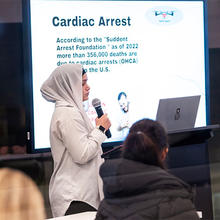
Thirty students, from first-years to PhDs in a variety of majors, participated in the MIX's eight-week Unmanned Aerial Systems Prototyping course this fall.
 October 18, 2023
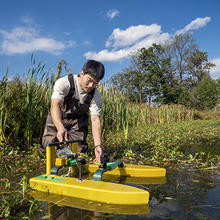
Collaboration between colleges has led to the creation of a unique autonomous surface water vehicle, collecting samples and reducing manual labor for researchers.
 October 12, 2023
It isn’t surprising the George Mason University, a university that has been recognized for its innovation and entrepreneurship, would be among the top 100 universities in United States for patents. This fall, the National Academy of Inventors ranked Mason No. 91 in its list of the top 100 universities granted patents during 2022.
 September 20, 2023
A George Mason University multidisciplinary research team recently received $5,000 in funding from the VentureWell Accelerator to continue to develop their app iCONNECT SUD.
 March 30, 2023
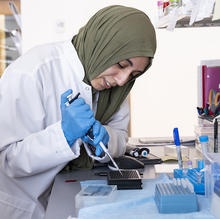
George Mason University researchers are taking advantage of DNA molecules’ self-assembly properties to develop vaccines rapidly, publishing their findings in Communications Biology
 February 27, 2023
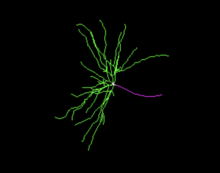
The George Mason University team behind NeuroMorpho.org has been honored for its work by the Federation of American Societies for Experimental Biology (FASEB) and the Office of Data Science Strategy at the National Institutes of Health (NIH).
 December 12, 2022
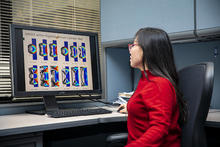
A George Mason University interdisciplinary team is studying underwater explosions and their effects on civil engineering infrastructure with the support of a $1.5 million grant from Defense Threat Reduction Agency.
 August 26, 2022
The Inclusive Teaching and Curriculum Initiative seeks to foster a more welcoming atmosphere for all students
 August 3, 2022
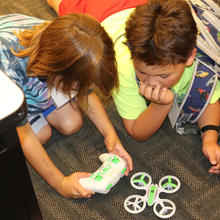
George Mason University's College of Engineering and Computing partnered with the College of Science to provide weekends filled with fun activities for students – rooted in STEM learning.
 November 11, 2021
The National Science Foundation (NSF)’s I-Corps program is an accelerator that helps entrepreneurs and researchers work together “to bring invention to impact.” Mason serves as an official I-Corps site, supporting local grantees through the exploratory stages of venture-building, as well as preparing them to apply for the national-level program.